“풍경은 기만적일 수 있다”는 경구에 비춰 완결된 사물 이면의 것은 무엇인지 다시 묻게 된다. 그런 점에서 완상이 ‘나’와 분리된 순수성에 대한 경탄이라면, 흙을 탐구한다는 것은 그 표면 아래의 관계적 층위—나와 타자, 땅과 몸, 장소와 실천의 간극—를 다시 여는 일이다.
오늘날 현대인뿐만 아니라 공예에 있어서도 ‘야생 흙’에 대한 감각은 거의 지워졌다. ROS는 그 사라진 땅의 감각을 되짚는다. 남양주에서 제주에 이르는 여정 속에서 이들의 작업은 흙의 성질을 따라 확장하고 변주되었다. 이번 전시는 그 과정의 한 막을 정리하는 장면으로서 ‘제주’를 탐구한다.
화산섬 제주는 흙의 기원성과 지질의 시간성이 가장 밀도있게 드러나는 장소다. 이번 전시에 참여한 강류, 고도미, 김도헌, 김민선, 김시월, 명보라, 이유진은 각기 다른 방식으로 제주라는 땅을 탐구한다. 잊혀진 것의 자리를 불러오고, 흙의 물성을 채집하듯 드러내고, 표면의 흔적을 기록하고, 보이지 않는 지열의 생명성을 포착하며, 감탕벌이 되어 소리를 만든다. 서로 다른 방식이지만, 이 발화들은 제주라는 장소를 사이에 두고 하나의 느슨한 군도를 이룬다.
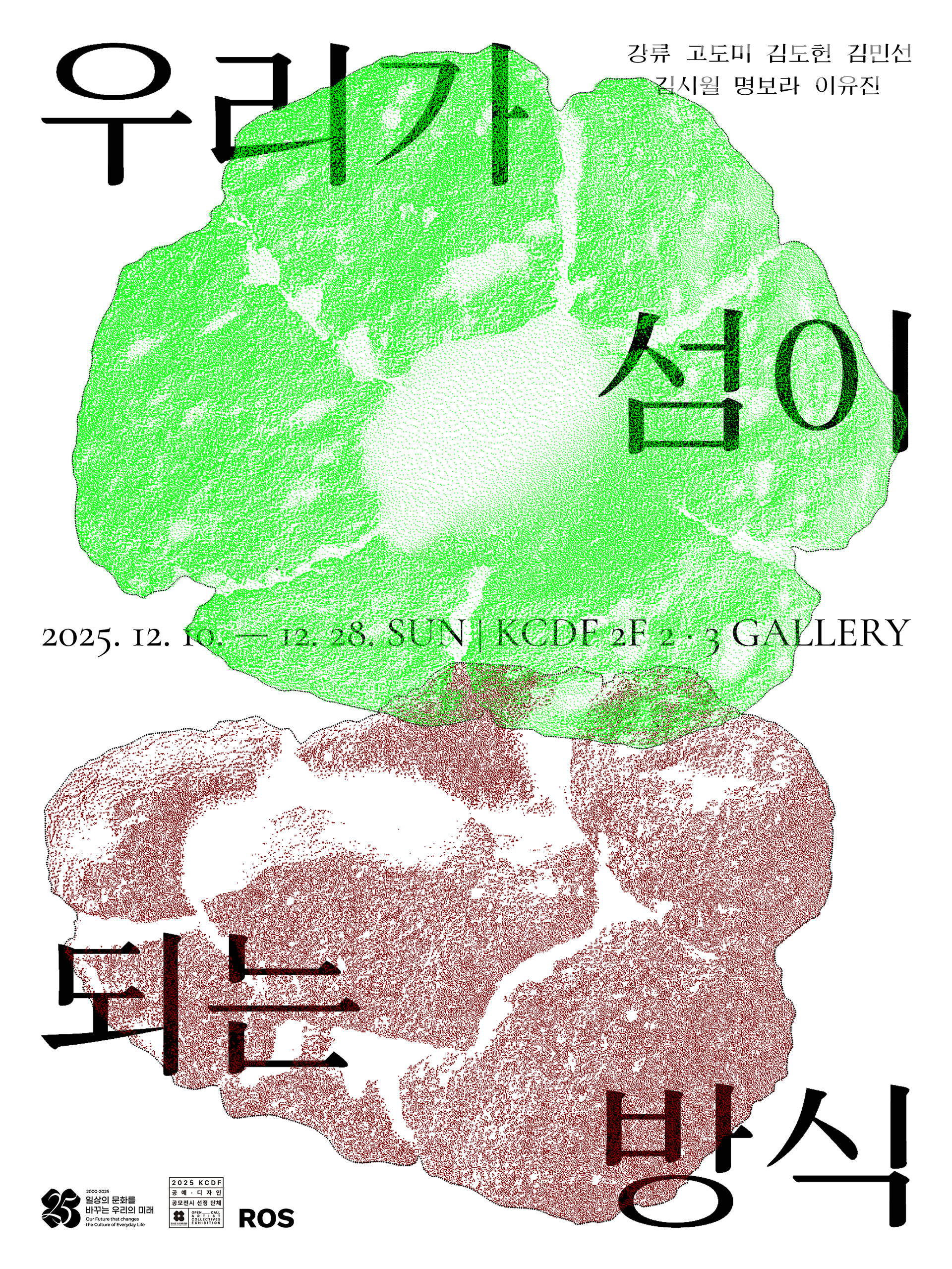
‘우리가 섬이 되는 방식’이란 제목이 암시하듯, 군도적 사유는 분절된 섬들이 서로의 차이를 유지한 채 관계를 만들어내는 방식이다. 이번 전시의 작업들 역시 각자의 섬-됨을 지키면서도, 흙이라는 공통의 매개를 통해 제주라는 장소성과 다시 연결된다. 흙의 의미와 감각이 희미해진 오늘날, 이들의 작업은 한국의 흙을 직접 마주하는 실천을 통해 그 안에 축적된 시간과 문화, 역사를 다시 불러낸다.
The adage that “landscape can be deceptive” prompts us to look again at what lies behind the seemingly complete object. If aesthetic contemplation evokes an admiration for a purity detached from the self, then to investigate earth is to reopen the relational strata beneath its surface—between self and other, land and body, place and practice.
The adage that “landscape can be deceptive” prompts us to look again at what lies behind the seemingly complete object. If aesthetic contemplation evokes an admiration for a purity detached from the self, then to investigate earth is to reopen the relational strata beneath its surface—between self and other, land and body, place and practice.
Today, not only in modern life but within craft itself, the sensibility of ‘wild clay’ has nearly vanished. In response, ROS retraces the earth, seeking to recover the sensibilities that have slipped from view. Across their journey from Namyangju to Jeju Island, their work has expanded and shifted by following the very nature of the soil. This exhibition presents “Jeju” as the chapter through which this process comes to rest, on a volcanic island where the earth’s primordial nature and geological time are most densely inscribed.
The participating artists—Gangryu, Domi KO, Doheon KIM, Minseon KIM, October KIM, Bora MYUNG, and Yujin LEE—each explore the ground of Jeju in different ways. They call forth what has been forgotten, reveal the materiality of earth as if gathering them by hand, record the traces left on its surfaces, capture the unseen vitality of geothermal heat, and, becoming potter wasps, draw sound from the soil. Though their approaches diverge, these gestures form a loose archipelago, with Jeju as the space in between.
As the title How We Become Islands evokes, archipelagic thinking recognizes the distinctiveness of separate islands while allowing relationships to emerge among them. The works in this exhibition likewise preserve their own island-being, yet reconnect to the sense of place called Jeju through earth as a shared medium. At a time when the meaning and sensibility of soil have faded, their practice encounters Korean earth directly, calling forth the time, culture, and history accumulated within it.
Root Oriented Society (2026)↵
Wild Clay Research (2023-2025)↵
물질-실천 Matter to Pratice (2025)↵
우리가 섬이 되는 방식 How We Become Islands (2025)↵
야생흙 견문록 Wild Clay Chronicles (2024)↵
뒹구는 돌은 언제 잠 깨는가 When Do Rolling Stones Wake Up (2023)↵
Local Plate (2025)↵
팔당잔치 Paldang Janchi (2025)↵
Local Plate (2024)↵
팔당리 산신제 Paldang-ri Sanshinje (2024)↵
Wild Clay Research (2023-2025)↵
물질-실천 Matter to Pratice (2025)↵
우리가 섬이 되는 방식 How We Become Islands (2025)↵
야생흙 견문록 Wild Clay Chronicles (2024)↵
뒹구는 돌은 언제 잠 깨는가 When Do Rolling Stones Wake Up (2023)↵
Local Plate (2025)↵
팔당잔치 Paldang Janchi (2025)↵
Local Plate (2024)↵
팔당리 산신제 Paldang-ri Sanshinje (2024)↵